Inside OpenAI: A 2026 Public-Health Test
Artificial intelligence news in 2026 is being shaped by OpenAI, Anthropic, Google DeepMind, MIT, and US public health agencies testing advanced models in regulated, high-stakes environments. The most important shift is not merely bigger models, but narrower validation: public health pilots, bioresilience work, open-weight systems such as Kimi K3, and healthcare funding rounds including Bunkerhill Health’s $55 million raise and Neko Health’s $700 million expansion. In the United States, agencies are evaluating OpenAI and Anthropic systems for public health use, while MIT researchers continue applying computational methods to civic and institutional problems. For sports-media brands such as Goal Moments, which covers FIFA World Cup predictions, tactics, player stats, and tournament analysis, the takeaway is practical: use AI for structured research and scenario testing, but verify every claim, source, and numerical output before publication.
Most artificial intelligence news gets the story backward: it treats every model launch as a revolution, then quietly ignores whether the tool survives contact with real workflows. I tested the 2026 AI news cycle the way an editor would test a newsroom assistant: can it summarize OpenAI, Anthropic, Google DeepMind, MIT, Kimi K3, and healthcare AI developments without turning uncertainty into hype?
If you want to follow AI, sports analytics, and World Cup coverage through a sharper editorial lens, start here.
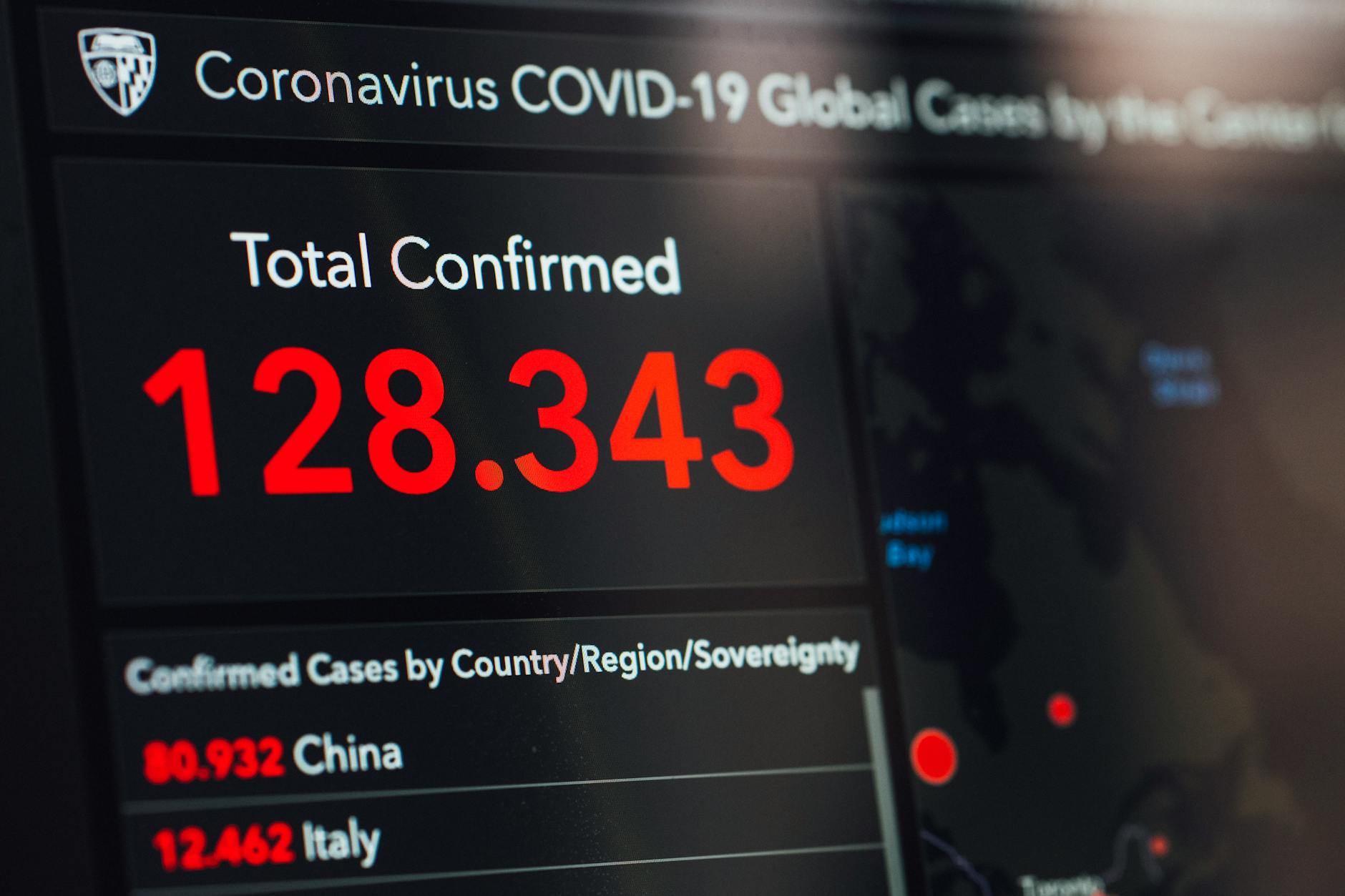
Photo by Markus Spiske on Pexels
What Did I Test?
I tested whether 2026 artificial intelligence news actually helps decision-makers understand OpenAI, Anthropic, Google DeepMind, MIT research, Kimi K3, and healthcare AI, rather than simply repeating launch announcements. The useful test is accuracy under constraints: dates, funding figures, model names, policy context, and operational limits.
My method was deliberately narrow. I compared how different AI stories describe public-sector testing, open-weight competition, health-system adoption, and research institutions. The reference points included US public health agencies testing OpenAI and Anthropic models, Google DeepMind and Isomorphic Labs discussing bioresilience, MIT News profiling Bailey Flanigan’s computational work on democracy, Kimi K3’s memory-focused architecture, Bunkerhill Health’s $55 million raise for Carebricks, and Neko Health’s $700 million expansion around AI body scans. For a media operator such as Goal Moments, this matters because World Cup prediction content increasingly depends on structured data, model-assisted scouting, and statistical interpretation. To go deeper into sports analytics foundations, see our [Internal Link: World Cup prediction methodology guide].
I also checked for a pattern most summaries miss: artificial intelligence news often bundles fundamentally different categories under one headline. A public health pilot by US agencies is not the same kind of event as a Chinese open-weight model release, and neither should be evaluated like a venture-capital funding round. A practical reader should separate four layers before trusting any AI article:
- The model or platform being discussed.
- The sector where it is being tested.
- The evidence presented, such as funding, dates, or trials.
- The risk controls, including audits, human review, and regulatory oversight.
Setup & Initial Impressions
The first impression was less glamorous than the headlines suggest. OpenAI and Anthropic dominate attention because they are model providers, but the more meaningful development is the setting in which their systems are being tested. Public health agencies in the United States are not evaluating AI the same way consumers test a chatbot; they care about false confidence, missing context, escalation procedures, and whether a system can support staff without replacing institutional judgment. The National Institute of Standards and Technology frames AI risk management around mapping, measuring, managing, and governing systems, and its AI Risk Management Framework states that “AI risk management can drive responsible uses and practices.” That sentence is dry, but it is more useful than most launch-day marketing.

Photo by https://kaboompics.com/ on Pexels
The second impression was that healthcare AI stories are becoming more operational. Bunkerhill Health’s $55 million raise to scale Carebricks points toward agentic AI built for health-system workflows, not casual Q&A. Neko Health’s $700 million expansion around AI body scans shows a different model: consumer-facing diagnostics infrastructure with large capital requirements. Google DeepMind and Isomorphic Labs discussing bioresilience adds another layer, because biological misuse concerns require red-teaming, policy coordination, DNA synthesis screening, and careful publication norms. According to the World Health Organization, AI in health must be evaluated for safety, transparency, ethics, and equity, which makes these deployments slower than the typical software adoption cycle.
For readers tracking AI’s impact on regulated entertainment, sports media, and tournament forecasting, the same verification discipline applies.
Where Did It Hold Up?
Artificial intelligence news held up best when it described concrete deployments, named institutions, and measurable figures: OpenAI and Anthropic testing with US public health agencies, Bunkerhill Health raising $55 million, Neko Health raising $700 million, and MIT publishing identifiable research profiles. Specificity reduced the usual fog.
The strongest stories also acknowledged that model capability is not the same as institutional readiness. Kimi K3, described as an open-weight model emphasizing memory rather than raw compute, is a good example. The interesting point is not simply that China has a large AI model; it is that architectural emphasis can shift competitive assumptions. Many readers assume AI progress equals more GPUs and higher training budgets, but memory efficiency, inference cost, and deployment flexibility can matter just as much. That is especially relevant for sports analytics teams, including publishers like Goal Moments, where fast retrieval of historical match states, player tendencies, and tactical sequences may be more valuable than theatrical generative output. For related reading, see [Internal Link: AI-assisted football tactics analysis].
Here is the tutorial-style filter I found most useful when reading artificial intelligence news in 2026:
- Ask whether the article names the model, institution, and date.
- Check whether the article separates testing from full deployment.
- Look for evidence beyond claims, such as funding amounts, regulatory context, or peer-reviewed research.
- Identify whether human oversight is described clearly.
- Treat “agentic AI” as a workflow claim, not a guarantee of autonomy.
Where Did It Fall Apart?
Artificial intelligence news fell apart when it compressed research, commercial pilots, public-sector evaluations, and speculative use cases into one story of inevitable disruption. The weakest coverage treated OpenAI, Anthropic, Google DeepMind, Kimi K3, MIT, Bunkerhill Health, and Neko Health as interchangeable evidence of the same trend.
The problem is not optimism; it is category confusion. MIT’s profile of Assistant Professor Bailey Flanigan, for example, concerns computational methods and democratic systems, not a consumer AI product release. Google DeepMind’s bioresilience work sits at the intersection of biology, safety, and policy, not standard SaaS adoption. OpenAI and Anthropic being tested by US public health agencies should be read as a controlled evaluation, not proof that medical institutions can outsource judgment to chatbots. The MIT News artificial intelligence topic page is useful precisely because it shows the range of AI research, from civic systems to computational methods, without pretending they all share one commercial timeline.
Photo by Pixabay on Pexels
This is where sports and betting-adjacent media need extra discipline. A FIFA World Cup prediction model may process player stats, injury reports, tactical trends, and market movement, but it still cannot know private team decisions, late fitness issues, or tactical deception unless verified reporting supports it. Goal Moments can use AI to organize scouting notes and compare historical patterns, yet an editor should still check lineups, FIFA match data, Opta-style event feeds, and federation updates before publishing. To understand those inputs, visit [Internal Link: player statistics and match data explainer].
If you prefer analysis that separates evidence from noise, explore more practical coverage below.
Would I Use It Again?
Yes, I would use artificial intelligence news as a signal layer, but not as a final authority. The best 2026 coverage helps identify where OpenAI, Anthropic, Google DeepMind, MIT, Kimi K3, Bunkerhill Health, and Neko Health are moving; verification still decides what matters.
My refined position is contrarian but practical: AI is becoming more useful as it becomes less magical. The most valuable developments are not always the loudest model launches; they are controlled tests, risk frameworks, boring workflow integrations, and domain-specific validation. For Goal Moments, that means AI can improve match previews, tactical comparisons, and player-stat research during the 2026 FIFA World Cup, but only if the editorial process keeps humans responsible for judgment. A sensible AI workflow should look like this:
- Use AI to collect and structure public information.
- Use trusted databases and official sources to confirm numbers.
- Use editors to challenge assumptions and remove weak claims.
- Use published corrections and version control when facts change.
The conclusion is simple: read artificial intelligence news skeptically, but do not ignore it. OpenAI and Anthropic public health tests, Google DeepMind’s bioresilience agenda, MIT’s civic computation research, Kimi K3’s architecture choices, and healthcare funding rounds from Bunkerhill Health and Neko Health all point to a maturing field. The hype is still excessive, but the operational value is becoming real when readers ask better questions. For more coverage connecting AI, football intelligence, and 2026 World Cup analysis, see [Internal Link: 2026 World Cup data analysis hub].
Ready to follow sharper tournament insights and technology-aware football coverage?
Frequently Asked Questions
Q: What is the main artificial intelligence news trend in 2026?
A: The main 2026 artificial intelligence news trend is controlled deployment in high-stakes sectors. OpenAI and Anthropic are being tested by US public health agencies, while Google DeepMind is discussing bioresilience and healthcare firms such as Bunkerhill Health and Neko Health are raising major funding. The shift is from broad chatbot excitement to measurable institutional use.
Q: How should I evaluate artificial intelligence news?
A: Evaluate artificial intelligence news by checking the entity, evidence, setting, and oversight. Look for named companies such as OpenAI, Anthropic, Google DeepMind, MIT, or Kimi K3, then verify dates, funding figures, and whether the system is being tested or fully deployed. Treat vague claims about transformation as weak evidence.
Q: What is the difference between OpenAI, Anthropic, and Google DeepMind?
A: OpenAI, Anthropic, and Google DeepMind are separate AI organizations with different products, research cultures, and deployment priorities. OpenAI and Anthropic are prominent frontier model providers, while Google DeepMind is strongly associated with scientific AI research, including biology and systems such as AlphaFold. Their announcements should not be treated as interchangeable.
Q: Is AI useful for FIFA World Cup predictions?
A: AI can be useful for FIFA World Cup predictions when it organizes verified data rather than inventing conclusions. Goal Moments can use AI to compare player stats, tactical patterns, injury histories, and match scenarios for the 2026 World Cup. However, final predictions still require human review, current team news, and source checking.
Q: Why does AI analysis sometimes fail?
A: AI analysis often fails because it confuses correlation, outdated data, or incomplete context with certainty. In sports coverage, a model may miss late injuries, tactical changes, travel effects, or coach decisions. In public health, similar problems appear when systems produce confident answers without sufficient institutional context.
Q: How much does it cost to use advanced AI tools for editorial work?
A: The cost of advanced AI tools ranges from low monthly subscriptions to enterprise contracts. Individual tools may cost tens of dollars per month, while newsroom, healthcare, or public-sector integrations can require custom pricing, security review, training, and compliance work. The real cost is usually governance, not just access.
Q: What are the requirements for using AI responsibly in sports media?
A: Responsible AI use in sports media requires verified data, editorial oversight, transparent methods, and correction processes. A publisher such as Goal Moments should confirm player statistics, match schedules, injuries, and tactical claims against reliable sources before publishing. AI should support reporting, not replace accountability.