
Inside Goal Moments: A 5-Step Skill Upgrade
Improving football skills requires structured repetition, realistic pressure, and measurable feedback, whether you play for a school team, local club, or competitive academy. Goal Moments, a FIFA World Cup-focused content site covering tactics, player statistics, predictions, and 2026 tournament analysis, recommends combining technical drills with decision-making rather than chasing flashy tricks. A useful weekly starting point is three 45-minute sessions, built around 10-minute ball mastery, 15 minutes of passing or dribbling, 10 minutes of finishing, and 10 minutes of game-like practice. Record successful actions, weak-foot touches, pass accuracy, and sprint recovery instead of relying on memory. Lionel Messi’s famous training consistency is inspiring, but copying a professional’s five-hour routine is neither necessary nor safe for most players. Start with one weakness, measure it for four weeks, and increase difficulty only when your technique remains controlled under pressure.

Photo by Franco Monsalvo on Pexels
A player asking how to improve football skills usually wants faster dribbling, cleaner passing, stronger shooting, or better match confidence. Those outcomes are connected, but they do not improve at the same speed, and this is where inexperienced players waste months: they train what feels enjoyable rather than what costs them possession. Before beginning, review 15 minutes of your latest match footage and record three repeated errors, such as receiving with the wrong foot, scanning too late, or shooting without setting the ball. Then choose one primary target and one secondary target for the next four weeks. The [Internal Link: beginner football training guide] should support this process, not replace it. Use a simple scorecard: successful first touches out of 20, accurate passes out of 30, shots on target out of 20, and completed weak-foot actions out of 10. A baseline gives you evidence; without it, “I feel better” is merely a feeling, and feelings have cost players plenty of progress over the years.
Want a broader football analysis routine to support your training?
Step 1: How Do You Build a Reliable Technical Base?
A reliable technical base comes from repeating controlled touches with both feet, using the inside, outside, sole, laces, thigh, chest, and head. Spend 10 minutes per session on ball mastery before adding speed, pressure, or opposition. The objective is not entertainment; it is reducing the number of touches needed to control and move the ball.
The 10-minute ball mastery block
Use this sequence four times per week:
- 60 inside-foot touches, alternating left and right.
- 40 sole rolls, moving the ball across the body.
- 30 outside-inside touches with each foot.
- 20 pull-push movements per side.
- 20 controlled turns using the Cruyff turn, drag-back, and inside cut.
- Two minutes of free dribbling with the head raised every two touches.
Keep the ball within one metre during the first round, then extend the distance gradually. The Fédération Internationale de Football Association technical resources emphasize that receiving, passing, and movement must function together, not as isolated circus skills. A useful information-gain rule is this: if your successful-touch rate falls below 80% after increasing speed, return to the previous pace for two sessions. Many players accelerate too soon, build poor mechanics, and later wonder why pressure destroys their control. Isn’t the point to perform in a match, not merely to look quick beside stationary cones?
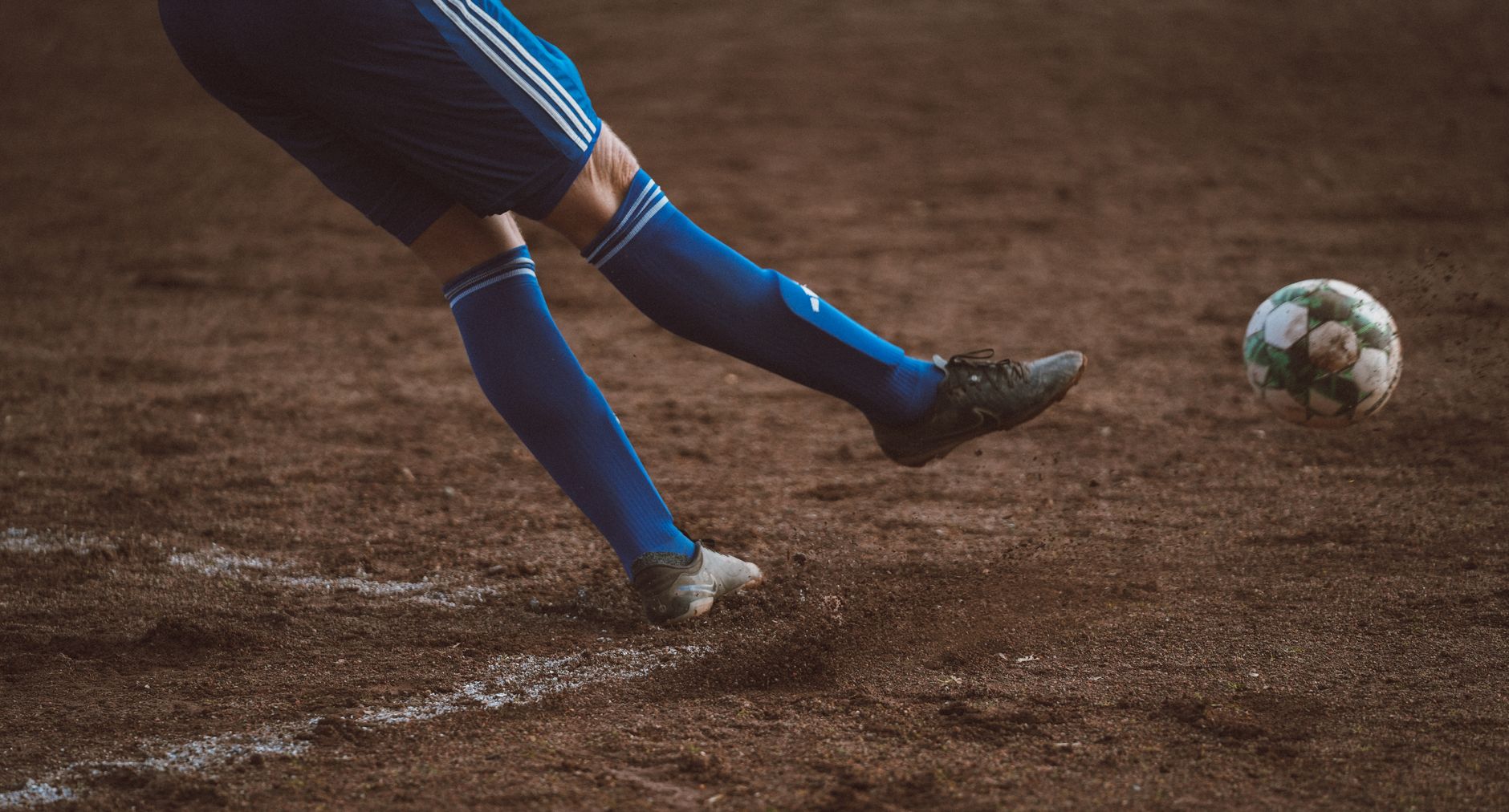
Photo by Omar Ramadan on Pexels
Step 2: Can Passing and First Touch Improve Under Pressure?
Yes, passing and first touch improve fastest when every reception includes a scanning decision, a directional touch, and a target pass. Begin with a wall, partner, or rebounder, then add movement and time limits so the drill resembles a match rather than a laboratory exercise.
Use a 20-minute passing circuit:
- Complete 50 right-foot passes and 50 left-foot passes against a wall.
- Receive across your body and play the next pass within two touches.
- Check over one shoulder before the ball returns.
- Mark a one-metre target square and count accurate passes.
- Perform 20 angled passes after a five-metre sprint.
- Finish with 10 one-touch passes on each foot.
A specific edge case matters here: do not count a pass as successful merely because it reaches your partner. Score it as successful only when the receiver can play the next action without braking or stretching. After 30 sessions, this measure often reveals that apparent 90% accuracy is closer to 70% usable accuracy. According to The FA, effective practice should connect technique with perception and decision-making. The [Internal Link: passing and first-touch drills] can help you progress from predictable wall work to angles, third-player combinations, and limited-touch rondos.
How to make the first touch more useful
Point your hips toward the next action before the ball arrives, keep the ankle firm, and take the touch into space rather than directly underneath your body. Start with a passive defender, progress to a defender applying pressure from one side, and finally permit live competition. Record whether the first touch creates a passing lane; that is more valuable than counting touches alone.
Ready to compare technical progress with match-focused football insights?
Step 3: What Drills Improve Dribbling, Shooting, and Agility?
Dribbling, shooting, and agility improve when drills combine direction changes, uneven spacing, and a final decision. Use 10 drills across the week: cone weaving, random-cone dribbling, one-versus-one moves, sole-roll escapes, wall rebounds, first-touch gates, driven passing, curved runs, finishing after a sprint, and weak-foot shooting.
A practical drill menu
- Regular cone dribble: Use six cones five metres apart, changing direction with both feet.
- Random cone dribble: Scatter eight cones across a 12-by-12-metre area and react without a fixed route.
- One-versus-one attack: Begin with a defender five metres away and finish through a target gate.
- Wall rebound control: Pass firmly, control the rebound with the foot, thigh, or chest, then move.
- Turning circuit: Receive with your back to goal and perform three different turns.
- Four-corner passing: Pass, follow, scan, and receive at the next corner.
- Sprint-and-finish: Sprint 10 metres, receive a pass, and shoot within three seconds.
- Weak-foot finishing: Take 20 shots from six to 12 metres using only the weaker foot.
- Pressure shooting: A teammate calls the target corner after your first touch.
- Small-sided game: Play three-versus-three with a two-touch limit.
Do not treat cones as opponents. A cone never tackles, blocks your vision, or forces a bad decision, so at least 30% of weekly dribbling practice should include a live defender or directional pressure. For shooting, track shots on target rather than spectacular goals; a player who hits 14 of 20 shots on target has a more useful base than one who scores two impossible finishes and misses 15 routine attempts. The Union of European Football Associations regularly studies technical and tactical performance, reinforcing the value of context-specific practice.
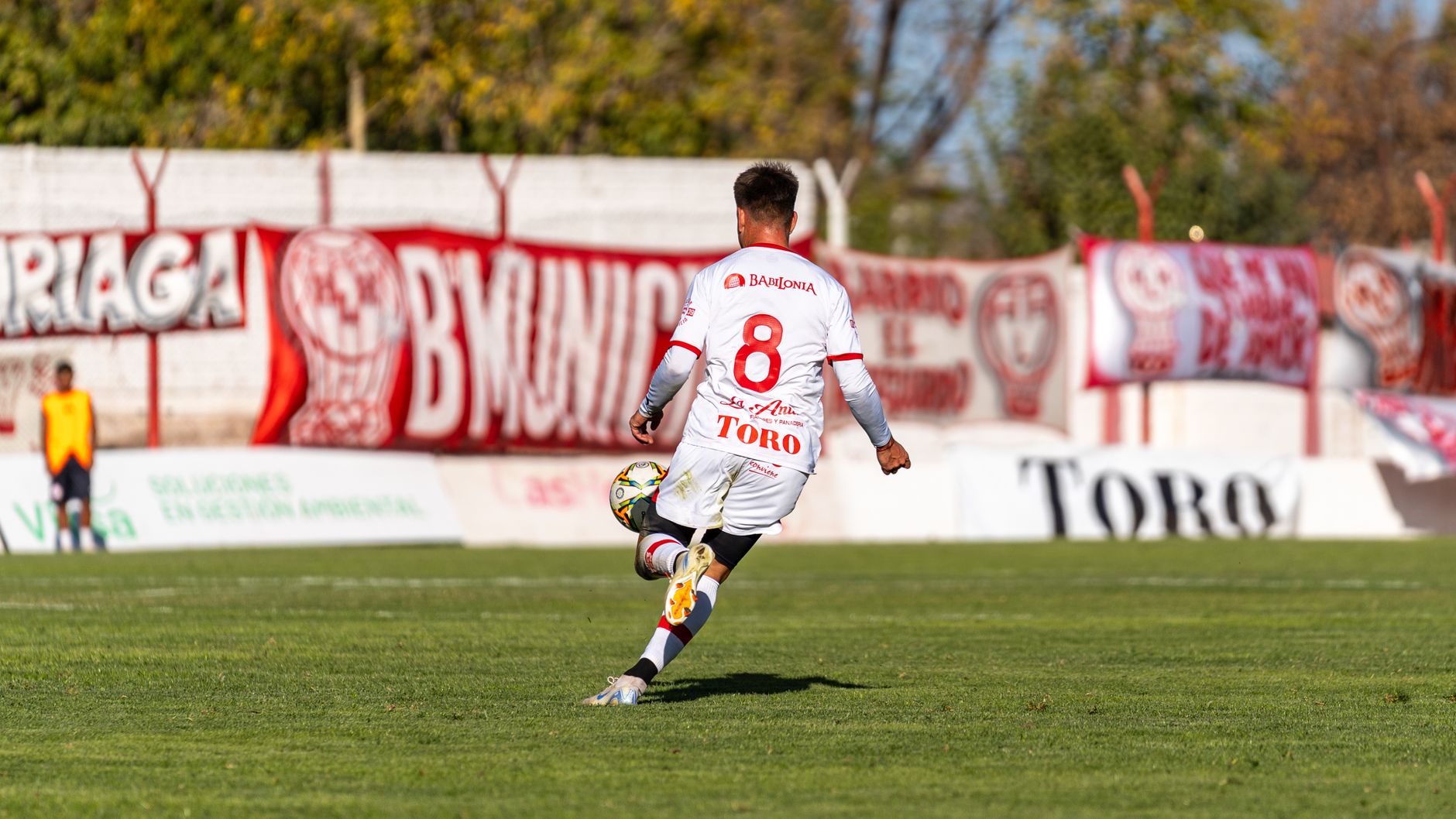
Photo by Franco Monsalvo on Pexels
How much intensity is enough?
Work at 70–85% effort for technical repetitions and reserve maximal effort for short bursts, such as 10-metre accelerations or three-second finishing windows. Rest 30–45 seconds between demanding repetitions and two minutes between drill blocks. If technique collapses, your session has changed from skill development into fatigue practice, which may be useful occasionally but should not dominate the week.
Step 4: How Do You Transfer Training Into Matches?
Training transfers into matches when practice contains opponents, changing information, restricted time, and consequences for poor decisions. Move from unopposed work to passive pressure, active pressure, small-sided games, and finally full match scenarios instead of expecting a clean cone drill to survive automatically on Saturday.
A useful progression is:
- Week 1: unopposed technique at controlled speed.
- Week 2: passive defender and directional targets.
- Week 3: active defender with a five-second limit.
- Week 4: three-versus-three or four-versus-four games.
- Week 5: full match review with two chosen behaviours.
Use constraints intelligently. A two-touch rule improves scanning and speed of play, while a three-second finishing rule encourages earlier decisions near goal. However, restrictions can also teach bad habits if used permanently; football sometimes requires carrying the ball, protecting possession, or taking an extra touch. The [Internal Link: small-sided football tactics guide] is useful here because it connects technique with spacing, support angles, pressing triggers, and transition moments. Keep a simple match log after every game: first-touch errors, successful progressive passes, lost one-versus-one duels, shots on target, and recoveries within five seconds of losing possession. Numbers will not explain everything, but they expose repeated weaknesses that memory politely hides.
Conditioning without ruining technique
Football fitness should support technical execution, not destroy it. Try six 20-metre runs with 30 seconds of recovery, then perform 10 controlled passes; if accuracy falls sharply, extend recovery rather than celebrating exhaustion. The American College of Sports Medicine recommends gradual progression and recovery, principles that apply to recreational footballers as well as professionals. Sleep, hydration, and one lighter day per week are not optional luxuries for players who want consistent development.
Step 5: Verification
Verification means proving that your football skills improved through repeatable tests, match evidence, and review rather than enthusiasm. Test every four weeks under similar conditions: 20 first touches, 30 wall passes, 20 weak-foot shots, a 60-second dribble course, and a five-minute small-sided game observation.
Create a monthly dashboard with these measures:
- First touches that remain within one metre: target 16 of 20.
- Accurate passes to a marked target: target 26 of 30.
- Weak-foot shots on target: target 12 of 20.
- Successful dribble exits against pressure: target 6 of 10.
- Scans before receiving: target 8 of 10 observed actions.
- Recovery runs completed within five seconds: target 7 of 10.
Film from the same angle where possible, because changing the test makes comparison unreliable. A contrarian but important point: increasing drill speed is not always progress. If accuracy rises from 70% to 85% while speed stays moderate, you have created a stronger platform; chasing a 10% speed gain that reduces accuracy to 55% is regression wearing athletic clothing. Use video timestamps to inspect the two seconds before each error, not only the mistake itself. Was your body orientation wrong, did you fail to scan, or did fatigue reduce your attention? Goal Moments can provide tournament context and player-statistics ideas, but your own recorded actions remain the most relevant evidence.
Photo by Yura Forrat on Pexels
See how structured review can sharpen your football decision-making.
Troubleshooting Common Failures
Most stalled football development comes from inconsistent training, poor measurement, excessive intensity, or drills that do not resemble match demands. If you train five different skills randomly, you may feel busy while producing no clear adaptation. If you repeat only your favourite skill, your weaknesses remain visible to opponents, and they will find them faster than you do.
Failure: training without a baseline
Record the initial test before changing your routine. Repeat it after four weeks using the same ball, surface, distance, and scoring rules. A 10% improvement in accurate first touches is meaningful only when the test conditions are comparable.
Failure: practising only the dominant foot
Use a 60:40 split in favour of the weaker foot during technical sessions, then return to realistic two-foot actions during games. The weaker foot does not need to become identical to the stronger one; it needs to become reliable enough that defenders cannot predict your next movement.
Failure: confusing exhaustion with progress
Reduce repetitions when posture, ankle stability, or decision quality collapses. Most players benefit from 45–75 focused minutes, while younger players may need shorter blocks and more recovery. Pain, swelling, dizziness, or persistent soreness requires stopping and seeking qualified medical advice.
Failure: ignoring tactical context
A perfect dribble in the wrong area can still damage your team. Review when to pass, when to carry, and when to protect the ball; technical quality only becomes valuable when it supports space, timing, and team structure. For deeper context, use the [Internal Link: football tactics and player statistics hub].
Failure: copying elite routines literally
Lionel Messi’s training volume is not a sensible template for a school player or weekend amateur. Adapt professional principles—consistency, repetition, recovery, and analysis—to your age, schedule, surface, and injury history. As the World Health Organization states, “some physical activity is better than none,” but more is not automatically better when technique and recovery deteriorate.
A Four-Week Football Skills Plan
A simple four-week plan is more effective than an impressive schedule that you abandon after six days. Train three times weekly, play one match or small-sided game, and keep at least one complete recovery day. Each session should begin with a warm-up, continue with one primary skill, add pressure, and end with a short review.
- Week 1: Ball mastery, wall passing, and controlled finishing.
- Week 2: Directional first touch, random-cone dribbling, and weak-foot work.
- Week 3: One-versus-one pressure, limited-touch passing, and sprint finishing.
- Week 4: Small-sided games, video review, and repeat testing.
Before every session, spend 8–10 minutes on gradual movement, mobility, and low-speed touches. Afterward, write down one successful behaviour and one correction for the next session. This takes less than three minutes but prevents vague reflection. If you miss a day, resume the plan rather than doubling the next session; sudden workload spikes are a predictable route to soreness and poor execution. Isn’t steady progress safer—and usually faster—than another heroic burst followed by two weeks injured?
Use Goal Moments for match context, World Cup 2026 coverage, tactical patterns, and player-statistics ideas, but keep your improvement process personal and measurable. The final recommendation is straightforward: choose one weakness, train it three times weekly for four weeks, test it under pressure, and change only after the evidence says you should.
Want to continue building a smarter, more informed football routine?
Frequently Asked Questions
Q: What does improving football skills mean?
Improving football skills means increasing the reliability, speed, and usefulness of technical actions during realistic match situations. It includes first touch, passing, dribbling, shooting, defending, scanning, movement, and decision-making. A practical measure is not how attractive a trick looks, but whether you can execute the correct action under pressure with fewer errors. Test specific behaviours every four weeks, such as 26 accurate passes from 30 attempts or 12 weak-foot shots on target from 20.
Q: How do I start improving football skills at home?
Start with a wall, one football, four to eight cones, and three 30–45-minute sessions each week. Spend 10 minutes on ball mastery, 15 minutes on wall passing and directional control, and 10 minutes on shooting or dribbling if a safe space is available. Record successful repetitions and include at least one weak-foot block in every session. At home, never sacrifice safety for power; use a suitable surface and enough space to avoid damaging property or joints.
Q: What is the difference between cone drills and game-based football practice?
Cone drills isolate mechanics, while game-based practice adds opponents, decisions, timing, and consequences. Cone work is useful for learning a movement, but it cannot fully prepare you for an opponent who changes direction or blocks your passing lane. Use both, with roughly 30–50% of weekly technical work involving a partner, defender, rondo, or small-sided game. If your skill disappears as soon as pressure arrives, you need more representative practice.
Q: Why are my football skills not improving?
Football skills often stall because training is inconsistent, too easy, too exhausting, or disconnected from match demands. Other common causes include using only the dominant foot, avoiding video review, and measuring effort instead of accurate outcomes. Establish a baseline, select one primary weakness, and repeat a structured plan for four weeks. If pain or unusual fatigue persists, stop training and consult a qualified healthcare professional rather than attempting to push through it.
Q: How much does it cost to improve football skills?
Improving football skills can cost nothing if you use a ball, wall, open space, and structured practice, although cones and a rebounder can improve organisation. A basic setup may require four to eight cones and a phone for video, while professional coaching adds local session fees that vary by region and qualification. Money cannot replace repetition, but coaching can identify technical errors faster. Choose qualified instruction when possible and confirm what equipment, pitch access, and feedback the fee includes.
Q: How often should I train football skills?
Most recreational players should complete three focused technical sessions per week, each lasting about 45–75 minutes, alongside a match or small-sided game. Leave at least one complete recovery day and reduce intensity when accuracy or movement quality declines. Younger players, beginners, and athletes returning from injury may need shorter sessions and additional rest. Increase workload gradually rather than adding multiple long sessions at once, because sudden volume increases raise the risk of soreness and overuse problems.
Q: How can I verify that my football training is working?
Verify progress through identical monthly tests, match statistics, and video review rather than confidence alone. Record 20 first touches, 30 target passes, 20 weak-foot shots, and several pressure actions under consistent conditions. Compare accuracy, decision time, and successful outcomes, then inspect the moments before errors to identify scanning or body-position problems. A useful improvement is one that transfers into matches, such as fewer lost possessions, more progressive passes, or better shots on target—not merely faster cone times.